Why Getting Sick Is Good for You
What if your body isn't betraying you, but trying to protect you?

Hello, My Vegan Kitchen Life Family!
Happy November!
As we enter this beautiful season of gratitude, reflection, and slowing down, I want to share a perspective on health that might surprise you.
What if getting sick isn't always the enemy? What if some of the symptoms we experience are actually our body's way of communicating with us?
Now, before you raise an eyebrow, hear me out.
I'm certainly not suggesting that illness is something we should welcome or celebrate. Some illnesses are serious, unpredictable, and require medical attention. But I do believe we've become so accustomed to treating symptoms that we sometimes forget to ask a very important question:
We live in a society that encourages us to keep going, push through discomfort, silence our symptoms, and get back to business as usual.
Have a headache? Take something.
Feeling exhausted? Grab another cup of coffee.
Experiencing digestive discomfort? Reach for something to settle your stomach.
Can’t sleep? Find something to help you sleep.
And while medications and treatments absolutely have their place, I often wonder how many opportunities we miss to understand what may be contributing to our discomfort.
Sometimes the symptom isn't the whole problem. It's a signal worth investigating.
Your body has an incredible built-in alert system
Think about it.
When you touch something hot, your nervous system immediately signals you to pull your hand away.
When you eat something contaminated, your body may respond with nausea, vomiting, or diarrhea in an attempt to protect itself.
When you encounter an allergen, your immune system may react with sneezing, itching, or inflammation.
When you develop an infection, a fever can be part of your immune system's response.
These reactions aren't necessarily signs that your body has failed you. In many cases, they're evidence that your body's protective systems are doing exactly what they were designed to do.
Your body is constantly working to maintain balance, even when you're not consciously aware of it.
But here's where I think we need to pay closer attention. Not every warning comes in the form of a dramatic illness.
Sometimes it's the persistent fatigue we've learned to live with. The bloating we experience after certain meals. The headaches that seem to appear at the same time every afternoon. The restless nights. The tension we carry in our shoulders. The digestive changes we keep dismissing.
These experiences can have many causes, and they don't automatically mean something is wrong with our food or lifestyle. But when symptoms become persistent or recurring, they deserve our attention.
Sometimes the answer is on our plate
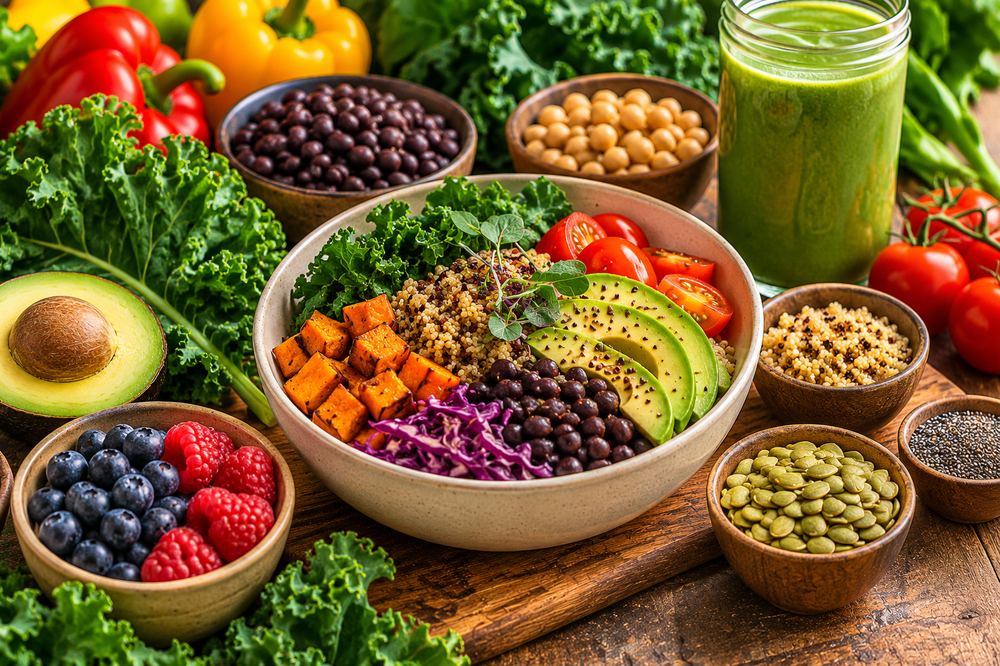
You know how passionate I am about the relationship between food and health.
After more than two decades on my plant-based journey, one of the greatest lessons I've learned is that what we consistently put into our bodies can influence how we feel and function.
Our digestive system is especially good at getting our attention.
For example, certain foods may trigger digestive discomfort because of an intolerance, allergy, sensitivity, or underlying gastrointestinal condition.
Other times, we may simply be eating too quickly, consuming more than our digestive system comfortably handles, or not getting enough fiber and hydration.
And sometimes, the issue isn't a particular food at all.
That's why I encourage you to become curious about your body rather than immediately labeling foods as good or bad. Pay attention to how you feel after eating.
Do you feel comfortably satisfied? Are you energized or unusually sluggish? Are you experiencing constant digestive discomfort? Are you getting a variety of nutrient-dense foods?
A diet rich in vegetables, fruits, legumes, whole grains, nuts, and seeds provides fiber and essential nutrients that support overall health.
But remember, even nutritious foods can cause discomfort for some people. The goal isn't to fear food. It's to understand your individual needs.
Food is information, and your body responds to that information every single day.
What if it's not the food?

Here's something else I've learned.
We can eat all the kale, blueberries, and chia seeds in the world, but if we're constantly stressed, sleep-deprived, emotionally overwhelmed, and neglecting our need for rest, our health may still suffer.
Our environment matters. Our relationships matter. Our sleep matters. Our mental and emotional well-being matter.
Chronic stress can affect digestion, sleep, blood pressure, and immune function. Poor air quality, environmental allergens, and certain chemical exposures can also contribute to symptoms.
And sometimes the exhaustion we feel is simply our body telling us that we need more rest.
I often remind the women in our Serene Shifts wellness community that rest isn't a reward for working hard. It's a biological necessity.
Especially as women navigate perimenopause, menopause, and the natural changes that come with aging, learning to recognize and respond to our body’s needs becomes increasingly important.
We cannot expect our bodies to operate at their best if we're constantly asking them to perform without giving them adequate time to recover.
What if we changed the conversation?
Instead of immediately becoming frustrated when something feels off, what if we approached our bodies with a little more curiosity and compassion?
Instead of saying: “Why is my body doing this to me?”
What if we asked:
“What might my body be responding to?”
“Have I been getting enough sleep?”
“Have I been nourishing myself properly?”
“Am I managing my stress?”
“Has something changed in my environment?”
“Is this something I should discuss with my healthcare provider?”
I believe this shift in perspective can change the way we approach our health.
Not because every illness has a simple explanation or can be prevented through lifestyle choices. It can't. But because becoming more aware of our bodies allows us to make informed decisions and recognize when something needs attention.
And sometimes that attention means seeking medical care rather than waiting for symptoms to disappear.
Listening to your body doesn't mean ignoring medicine. It means becoming an active participant in your own well-being.
November: a season of gratitude for our bodies
November is traditionally a month when we focus on gratitude. We're thankful for our families, our friendships, our homes, and the opportunities we've been given.
But how often do we stop to thank our bodies?
The heart that beats without us having to think about it. The lungs that carry oxygen throughout our bodies. The immune system that works around the clock to help protect us. The digestive system that transforms the food we eat into nutrients our cells can use. The muscles that allow us to move.
The remarkable ability our bodies have to heal and recover from so many everyday challenges.
Even when our bodies aren't functioning exactly as we'd like, they deserve our care and respect.
And perhaps one of the greatest expressions of gratitude is learning to take better care of them.
Not through perfection. Not through restriction. Not through fear. But through intentional, consistent choices that support our health.
My November wellness challenge to you
This month, I want to encourage you to practice something simple.
Spend the next 30 days becoming a better listener to your body. Here are five ways to begin:
- Pay attention to your digestion. Notice how different meals make you feel. Eat slowly, chew thoroughly, and give yourself time to enjoy your food.
- Prioritize quality sleep. Create a consistent bedtime routine and give your body the opportunity to rest and recover.
- Move with intention. Walk, stretch, practice yoga, dance, or lift weights. Find movement that supports your physical and emotional well-being.
- Nourish instead of punish. Choose more whole, plant-based foods that provide fiber, vitamins, minerals, and protein. Remember that healthy eating is about consistency, not perfection.
- Honor the signals. If you're tired, consider whether you need rest. If you're stressed, create space to decompress. And if you're experiencing persistent, worsening, or concerning symptoms, don't dismiss them. Seek appropriate medical guidance.
My final thoughts
I titled this newsletter “Why Getting Sick Is Good for You” because I wanted to challenge the way we think about illness.
But perhaps the deeper message is this:
Our bodies are incredibly intelligent, but they're not invincible. They can adapt, compensate, protect, and recover, but they also need our support.
Sometimes a symptom is a temporary response to an everyday challenge. Other times, it's an indication of something that needs medical attention. The important thing is not to ignore it.
As we move into the final two months of the year, I encourage you to stop waiting for January 1st to begin prioritizing your health.
Start today. Pay attention. Ask questions. Make adjustments where necessary.
And most importantly, extend a little gratitude to the body that has carried you through every season of your life.
Because wellness isn't simply about avoiding illness. It's about building a relationship with your body that allows you to recognize its needs, support its health, and live with greater intention.
Wishing you a beautiful November filled with nourishment, gratitude, and good health.
With love and wellness,
Michelle 💚
My Vegan Kitchen Life · Life Tastes Good
For general wellness and educational purposes only — not medical advice. Always consult your primary physician or a qualified healthcare provider before starting any nutrition, diet, or wellness program.